


Years experience can make a big difference on a resume, job application, or professional profile. But sometimes, the wording creates confusion. Should you write “years experience,” “years of experience,” or “years’ experience”? The answer depends on how the phrase works in a sentence. Getting it right can make your writing look cleaner and more professional.
Grammar questions like this often appear alongside other confusing word choices. You might wonder whether it’s “i would love to or too,” “sleave vs sleeve,” or “cacoon or cocoon.” These small spelling and usage differences can change how polished your writing feels. Learning the years experience rule behind each one makes things much easier.
In this guide, you’ll learn how to use experience phrases correctly. You’ll also see clear examples and common mistakes to avoid. Along the way, we’ll briefly touch on “tought vs taught” and “minoot,” so you can understand why correct spelling and grammar matter.
Why the Difference Between Years of Experience and Years’ Experience Matters
Small grammar choices can affect how professional your writing feels. When someone reads a resume or job application, they expect clear and accurate language. A phrase such as “10 years experience” may still be understood, but it can look incomplete.
That doesn’t mean one missing word will ruin a job application. Your skills, achievements, and qualifications matter far more. Still, polished wording helps your resume create a stronger first impression.
For most readers, “10 years of experience” sounds natural immediately. It clearly tells them how much professional experience you have without making them stop and interpret the phrase.

Understanding What “Years of Experience” and “Years’ Experience” Mean
The expressions “years of experience” and “years’ experience” communicate almost the same basic idea. Both describe the amount of experience someone has gained over a period of time.
The main difference is grammatical structure. One uses the preposition “of,” while the other uses a plural possessive form.
“Years of Experience” — The Most Common Standard Form
“Years of experience” is the clearest choice for most professional situations. It uses “of” to connect the number of years with the experience being discussed.
For example:
- “She has five years of experience in marketing.”
- “I have three years of experience in customer service.”
- “He brings more than 10 years of experience to the position.”
This wording works naturally in American English. You’ll commonly see it in resumes, job descriptions, LinkedIn profiles, company websites, and cover letters.
If you’re unsure which form to choose, use “years of experience.” It’s straightforward, familiar, and unlikely to distract your reader.
“Years’ Experience” — How the Possessive Form Works
“Years’ experience” uses a plural possessive. The apostrophe comes after the s because the phrase refers to multiple years.
For example:
- “She has five years’ experience in accounting.”
- “The candidate has more than eight years’ experience in software development.”
- “He brings 12 years’ experience in financial analysis.”
This construction is grammatically established, particularly in British English. It can also appear in formal professional writing elsewhere.
However, American readers generally encounter “years of experience” more often. So if you’re writing for a US audience, that version usually feels more natural.
When to Use Years of Experience vs. Years’ Experience
Both forms can be correct. Your choice mainly depends on style, audience, and regional usage.
| Phrase | Best Use | Example |
| years of experience | General professional writing | “She has seven years of experience.” |
| years’ experience | Formal or British-style writing | “She has seven years’ experience.” |
| year’s experience | Exactly one year | “He has one year’s experience.” |
| years experience | Usually avoid in standard prose | “She has seven years experience.” |
For American resumes and business writing, years of experience is the easiest option.
How Apostrophes Work in Time and Experience Expressions
Apostrophes can show possession, but they can also appear in expressions involving periods of time. That’s why phrases such as “a day’s work” and “two weeks’ notice” are grammatically possible.
The same pattern explains “years’ experience.” The years are treated as a possessive expression connected to the experience.
Duration and Possession in Professional Writing
Possession doesn’t always mean physical ownership. English can use possessive forms to connect a period of time with something associated with it.
Consider these examples:
- “a year’s salary”
- “one month’s rent”
- “two days’ notice”
- “three weeks’ vacation”
- “five years’ experience”
In each case, the time expression relates directly to the following noun.
However, “years of experience” expresses the same relationship through a prepositional phrase. That’s one reason it feels so natural in modern professional English.
Why Experience Phrases Often Cause Apostrophe Confusion
The confusion usually comes from seeing several forms that look similar. Writers may know that an apostrophe can work with time expressions, but they aren’t always sure where it belongs.
A useful rule is:
- One year → year’s
- More than one year → years’
- General measurement → years of
For example:
- “one year’s experience”
- “five years’ experience”
- “five years of experience”
The first two use possessive constructions. The third uses “of” instead.
Singular and Plural Forms of Year’s Experience
The number before year determines whether the possessive should be singular or plural. This distinction becomes important when you choose an apostrophe-based construction.
“Year’s Experience” — When the Singular Form Is Correct
Use “year’s experience” when you’re referring to one year.
Examples include:
- “I have one year’s experience in retail.”
- “The position requires a year’s experience.”
- “She gained a year’s experience before moving into management.”
You can also say “one year of experience,” which is often more natural in American English.
The key point is simple: year’s refers to one year.
“Years’ Experience” — When the Plural Possessive Is Correct
Use “years’ experience” when you mean two or more years.
For example:
- “She has three years’ experience in sales.”
- “He has eight years’ experience in web development.”
- “The applicant has more than 15 years’ experience in education.”
Notice where the apostrophe goes. It comes after the s because “years” is plural.
You should not write “years’s experience.” That form is incorrect.
How to Choose Between Year’s and Years’ Experience
Start by looking at the number.
If the experience covers one year, use year’s:
“One year’s experience”
If it covers several years, use years’:
“Five years’ experience”
If you want the most broadly accepted wording in American English, use years of experience:
“Five years of experience”
That last option avoids the possessive question entirely.
Common Mistakes With Years of Experience and Years’ Experience
Because this years experience looks similar, several mistakes appear regularly. Most are easy to fix once you understand the basic structure.
Mistake: Assuming Years’ Experience Is Always Correct
Some writers learn that time expressions can use possessives and then apply the rule everywhere. That can lead to awkward writing.
You don’t need an apostrophe simply because a sentence contains a number of years. “Years of experience” is already grammatically complete.
For example:
Correct: “She has 10 years of experience.”
Also correct: “She has 10 years’ experience.”
Less standard: “She has 10 years experience.”
The first option is usually the best choice for US professional writing.
Mistake: Using Year’s Experience for Multiple Years
The singular possessive year’s refers to one year. It shouldn’t be used when the sentence describes several years.
Incorrect:
“He has five year’s experience.”
Better:
“He has five years’ experience.”
Or, more naturally for many US readers:
“He has five years of experience.”
The plural noun years needs the plural possessive form years’ when you use that construction.
Incorrect Years of Experience Phrases to Avoid
Here are some common forms worth remembering:
- “5 years experience” — usually avoid in standard prose.
- “5 year’s experience” — incorrect because five is plural.
- “5 years’s experience” — incorrect possessive formation.
- “5 years of experiences” — usually incorrect because experience is being used as an uncountable noun.
- “5 year of experience” — incorrect because five requires the plural “years.”
The cleanest version remains:
“5 years of experience”
Years of Experience vs. Years’ Experience on a Resume
Your resume should make important information easy to scan. That includes your professional experience.
If you’re applying for a US-based position, “years of experience” is usually the safest wording. It’s familiar, direct, and easy for recruiters to understand quickly.
Which Experience Phrase Looks Best on a Resume?
There’s no universal rule saying that every resume must use one particular construction. Still, consistency matters.
For example, you could write:
Digital Marketing Specialist with 7 years of experience in SEO and content strategy.
That sounds natural and professional.
You could also write:
Digital Marketing Specialist with 7 years’ experience in SEO and content strategy.
This is grammatically valid, but the first version is generally more familiar to US readers.
Avoid cramming the phrase into a headline just to repeat the keyword. Your resume should focus on what you actually achieved.
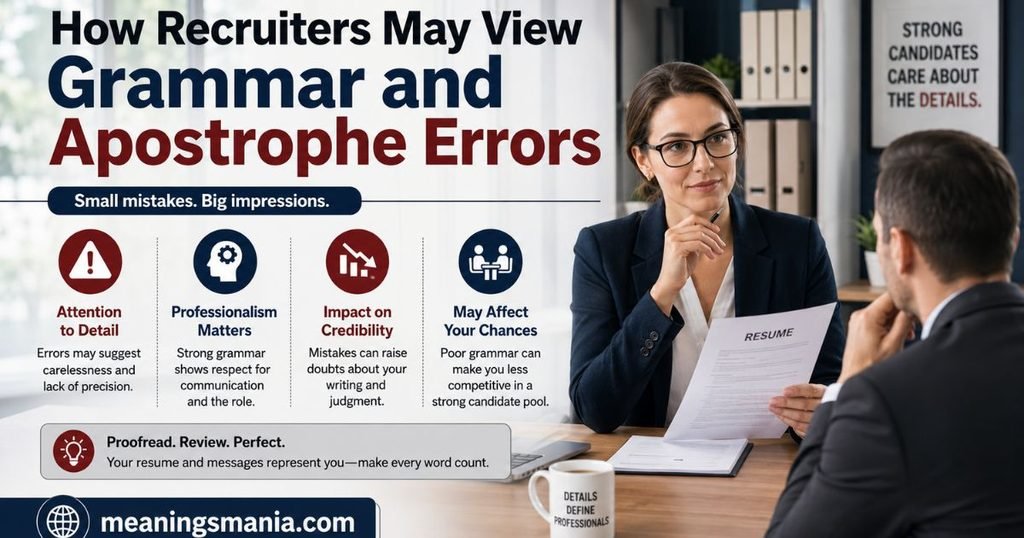
How Recruiters May View Grammar and Apostrophe Errors
Recruiters usually care more about qualifications and results than one apostrophe. Still, obvious grammar mistakes can make a document appear less polished.
Compare these:
Less polished:
“Marketing writer with 6 years experience and strong SEO skills.”
More polished:
“Marketing writer with 6 years of experience and strong SEO skills.”
The second sentence reads more smoothly. It also removes any uncertainty about the intended structure.
Your goal isn’t to impress recruiters with complicated grammar. It’s to make your professional background easy to understand.
Formality and Style Guide Preferences for Experience Phrases
Different regions and professional settings may favor different constructions. Knowing your audience can help you make a better choice.
Business and Academic Writing Conventions
Formal writing often pays close attention to grammar and consistency. You may therefore encounter “years’ experience” in academic, legal, or British-style documents.
For example:
“The researcher has six years’ experience in environmental policy.”
That construction is perfectly understandable.
Still, “six years of experience” remains a strong alternative. It sounds natural without sacrificing clarity.
Resume, LinkedIn, and Workplace Writing Differences
Your platform can influence the wording you choose.
On a resume, clarity should come first. On LinkedIn, natural conversational language often works well. In a formal report, your organization may follow a specific style guide.
Examples:
Resume:
“8 years of experience in project management.”
LinkedIn:
“I bring eight years of experience helping teams deliver complex projects.”
Professional report:
“The consultant has eight years’ experience in project management.”
All three communicate the same general idea. The surrounding context changes the best wording.
US English vs. UK English Usage Preferences
Regional English can influence which construction sounds most familiar.
In US English, “years of experience” is especially common in resumes and professional communication.
In UK English, “years’ experience” is also widely used and may sound completely natural.
Neither audience needs to be confused by the other version. If you’re writing specifically for American readers, however, years of experience is usually the safest choice.
Better Ways to Describe Professional Experience
Knowing the correct phrase is useful, but strong professional writing goes further. Simply stating your number of years doesn’t show what you accomplished during that time.
How to Write “Years of Experience” on a Resume
Place the experience statement where it supports your qualifications rather than repeating it throughout the document.
For example:
Content writer with 5 years of experience creating SEO-focused articles and web copy.
This gives the reader three useful details: your role, your experience level, and your specialty.
You can also make the statement more specific:
SEO specialist with 6 years of experience improving organic visibility for small business websites.
Specific wording gives your experience more meaning.
How to Quantify Work Experience More Effectively
Years of work experience provide context, but measurable results show impact.
Instead of only saying:
“I have seven years of marketing experience.”
Try:
“Managed SEO campaigns that increased organic traffic by 42% over 12 months.”
Useful details might include:
- Revenue growth
- Traffic increases
- Cost savings
- Team size
- Project volume
- Conversion improvements
- Customer retention
- Time saved
Your number of years tells readers how long you’ve worked. Results tell them what you accomplished.
When You Should Avoid Saying “Years of Experience”
Sometimes your achievements already communicate your expertise. In those cases, repeating your experience level can add unnecessary words.
For example, instead of:
“I have 10 years of experience managing large teams.”
You might write:
“Led a 25-person team across five major product launches.”
The second statement provides stronger evidence of leadership. Use years of experience when the number genuinely adds useful context.
Examples of Years of Experience in Different Formats
The best wording can vary slightly depending on where you use it. Here are practical examples you can adapt.

Resume Summary Examples Using Experience Phrases
Example 1:
SEO writer with 4 years of experience creating search-focused content for competitive industries.
Example 2:
Project manager with more than 10 years of experience leading cross-functional teams.
Example 3:
Customer support specialist with 2 years of experience handling high-volume customer requests.
These examples work because they connect the number of years with a specific professional skill.
LinkedIn Experience Statement Examples
LinkedIn allows a slightly more conversational tone.
For example:
“I’ve spent six years working in content marketing, with a focus on SEO and audience growth.”
Another option:
“After eight years in software development, I now focus on building reliable web applications.”
These sentences sound more personal than a traditional resume summary while remaining professional.
Professional Bio Examples for Different Careers
A professional bio can mention experience without sounding like a list of qualifications.
Marketing:
“With more than nine years of experience in digital marketing, Sarah specializes in content strategy and organic growth.”
Technology:
“James has seven years of experience developing cloud-based applications for growing businesses.”
Education:
“With five years of teaching experience, Maria focuses on creating practical and engaging learning environments.”
Notice that each example connects experience with a professional focus.
Years of Experience in Job Applications and Cover Letters
Job applications often ask about your professional background directly. This is where clear wording becomes especially useful.
How to Mention Years of Experience in a Cover Letter
Don’t simply repeat the number from your resume. Connect it to the requirements of the position.
For example:
“I bring five years of experience in SEO content writing, including hands-on work with keyword research, content optimization, and web publishing.”
That sentence does more than state a number. It shows how your experience matches the role.
If the employer specifically asks for a certain amount of experience, address that requirement directly.
“With six years of experience in customer service, I meet the position’s requirement for extensive client-facing experience.”
Best Phrases for Describing Relevant Work Experience
You have several natural options depending on your situation:
- “I have five years of experience in…”
- “I bring five years of experience in…”
- “With five years of experience, I…”
- “I’ve spent five years working in…”
- “Over the past five years, I’ve…”
- “I have extensive experience in…”
The best choice depends on the sentence around it. Don’t force the exact phrase years experience into every sentence.
How to Say You Have Many Years of Experience Naturally
Repeating the same wording can make professional writing feel dull. Fortunately, you have plenty of alternatives.
Alternatives to “I Have X Years of Experience”
Instead of repeating “I have,” try:
- “I bring eight years of experience in sales.”
- “I’ve spent eight years working in sales.”
- “With eight years of experience, I specialize in…”
- “Over eight years, I’ve developed expertise in…”
- “I offer extensive experience in sales and business development.”
These options create more variety while keeping your meaning clear.
Professional Ways to Highlight Extensive Experience
If you don’t need to give an exact number, you can use phrases such as:
- extensive experience
- several years of experience
- a strong professional background
- substantial industry experience
- deep hands-on experience
- a proven track record
For example:
“She brings extensive experience in digital publishing and SEO.”
This can work well when the exact number of years isn’t important.
Quick Reference Guide for Years of Experience Grammar
If you’re still unsure, use this quick guide.
| Expression | Correct? | When to Use It |
| years of experience | Yes | Best general choice, especially in US English |
| years’ experience | Yes | Plural possessive, common in British English and formal writing |
| year’s experience | Yes | Refers to one year |
| years experience | Usually no | Avoid in standard professional sentences |
| year’s of experience | No | Incorrectly combines two structures |
| years’s experience | No | Incorrect plural possessive |
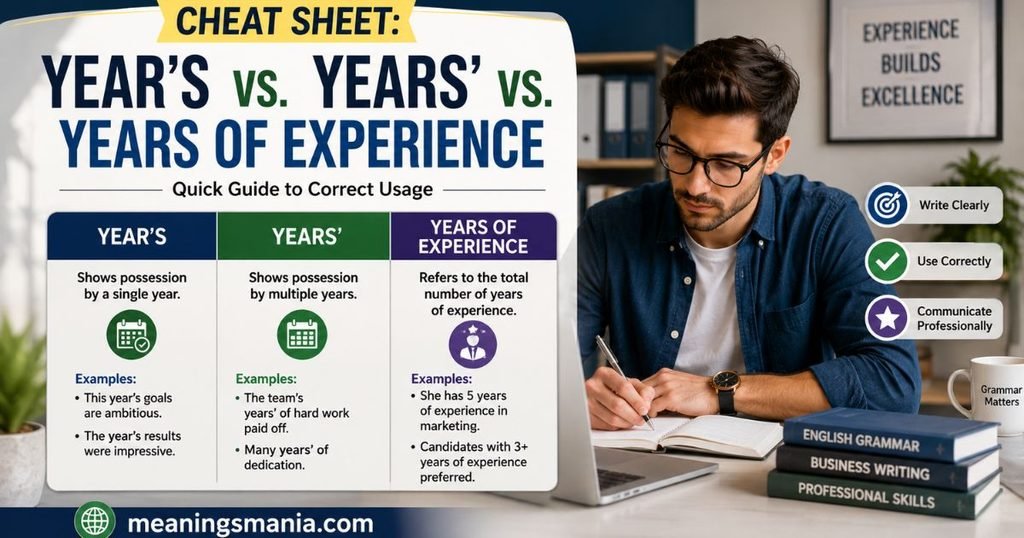
Cheat Sheet: Year’s vs. Years’ vs. Years of Experience
Here’s the easiest way to remember the difference:
One year:
“one year’s experience”
Several years:
“five years’ experience”
Standard US professional wording:
“five years of experience”
Avoid:
“five years experience”
When you’re writing a resume, cover letter, LinkedIn profile, or business document for an American audience, years of experience is usually your best choice.
The phrase years experience may appear in shortened job ads, forms, tables, or informal notes. However, that doesn’t make it the strongest choice for complete sentences.
The bigger lesson is simple: choose wording that makes your experience easy to understand. Grammar should support your message, not distract from it.
FAQs
Is “years experience” grammatically correct?
“Years experience” is generally nonstandard in complete sentences; use “years of experience” for clear, professional American English.
Should I write “years of experience” on my resume?
Yes, “years experience” is a clear, natural choice for resumes, especially when writing for American employers and recruiters.
Is “years’ experience” correct in English?
Yes, “years’ experience” is grammatically acceptable and particularly common in British English and some formal professional writing.
What’s the difference between years’ experience and years of experience?
Both describe accumulated professional experience, but “years’ experience” uses possession while “years experience” uses an “of” phrase.
Is “year’s experience” correct for one year?
Yes, “year’s experience” correctly refers to one year, although “one year of experience” often sounds more natural in American English.
Should I use an apostrophe in years of experience?
No, “years of experience” doesn’t need an apostrophe because “of” already connects the duration with professional experience.
How should I say years of experience professionally?
Use phrases like “five years of experience,” “over five years of experience,” or “extensive experience” depending on your intended meaning.
Conclusion
Choosing the right phrase can make your writing sound much cleaner. If you’re unsure about years experience, remember that “years of experience” is usually the safest choice. “Years’ experience” is also correct, while “year’s experience” refers to one year. These years experience grammar choices can make your resume, cover letter, or profile feel more polished.
English has many confusing word choices, and context often decides the correct form. The same is true when comparing i would love to or too, sleave vs sleeve, and cacoon or cocoon. Knowing the difference helps you write with greater confidence. You don’t need complicated grammar rules to improve.
The key is to choose clear wording and use it consistently. Whether you’re describing professional years experience or checking spellings such as tought vs taught and minoot, accuracy matters. Take a moment to check uncertain words before publishing your writing. A few simple corrections can make your message easier to read and much more professional.
