


A window has more working parts than you might think. Some are easy to see, while others quietly protect your home from outside weather. That’s where the confusion around Window Seal vs Window Sil often begins.
The two terms sound similar, but they describe completely different parts. A Window Sill vs Window Sill helps close gaps and reduce air or water infiltration. A window sill is the horizontal surface at the bottom of the window. Knowing the difference can save you from using the wrong term when discussing repairs or maintenance.
Whether you’re fixing an old window, planning a replacement, or simply curious about window terminology, this guide makes the distinction easy to understand. Let’s break down what each part does and why it matters.
Quick Answer: Window Seal vs Window Sill
The simplest way to understand Window Seal vs Window Sil is to focus on what each part does. A Window Sill vs Window Sill creates a barrier around certain areas of the window. It helps limit drafts, moisture, dust, and unwanted air movement.
A window sill, meanwhile, is the ledge or horizontal surface located at the bottom of a window. It can support part of the window assembly and, particularly on exterior windows, help manage water drainage.
Here’s the quick version:
- Window seal: Helps close gaps and protect against air and moisture.
- Window sill: Forms the bottom ledge of the window and helps with support and drainage.
- Window frame: Holds the window components together and connects the window to the building.
So, if you’re asking about insulation or drafts, think seal. If you’re talking about the ledge where a plant sits, think sill.
What Is a Window Seal and What Does It Do?
A window seal is a sealing component used to close spaces around a window. Depending on the window design, the seal may sit around the glass, between moving sections, or along parts of the frame.
Its job is fairly straightforward: keep unwanted things outside. A properly working seal can help reduce drafts, moisture entry, dust, and cold air leakage. It can also contribute to better thermal insulation because fewer gaps allow conditioned indoor air to escape.
Different windows use different window sealing materials. Common options include rubber compounds, flexible gaskets, weatherstripping, caulk, and silicone sealant. Modern insulated glass units may also use specialized glazing seals around the glass panes.
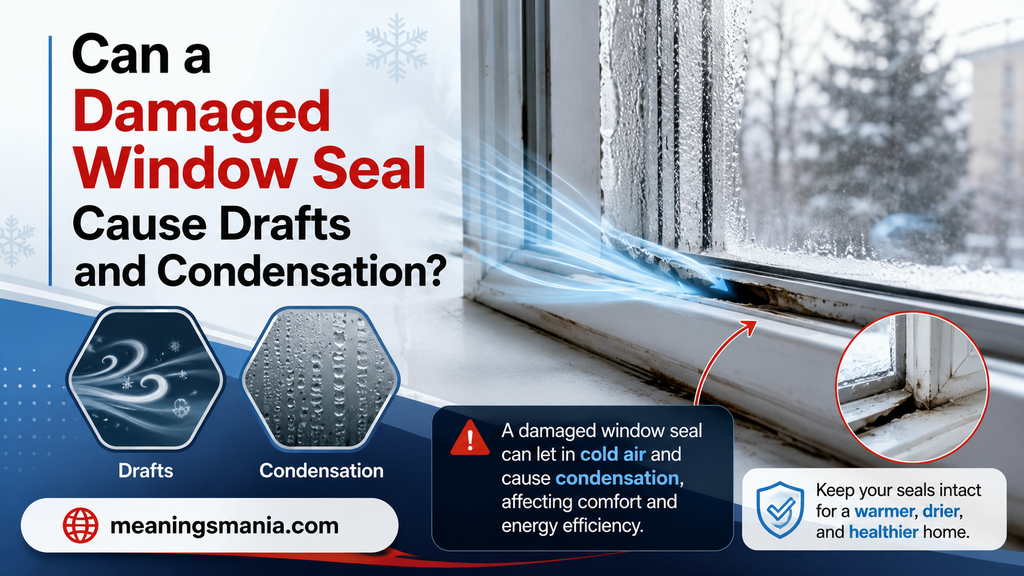
When a seal becomes worn or damaged, you might notice drafts, moisture, condensation, or reduced comfort near the window. In double-pane units, seal failure can sometimes lead to fogging between the panes.
Where Is the Window Seal Located?
There isn’t always one single location for a window seal. Its position depends on the type and construction of the window.
You might find sealing material around the glass, between the sash and frame, or where different window components meet. Weatherstripping is commonly placed around opening sections to reduce gaps when the window closes.
For example, if you can feel cold air coming through the edge of a closed window, the weather seal or weatherstripping may be worn. If moisture appears between insulated glass panes, the glazing seal may have failed.
That’s why saying “the window seal” can sometimes refer to different sealing components. The exact location matters when diagnosing a problem.
What Is a Window Sill and Why Is It Important?
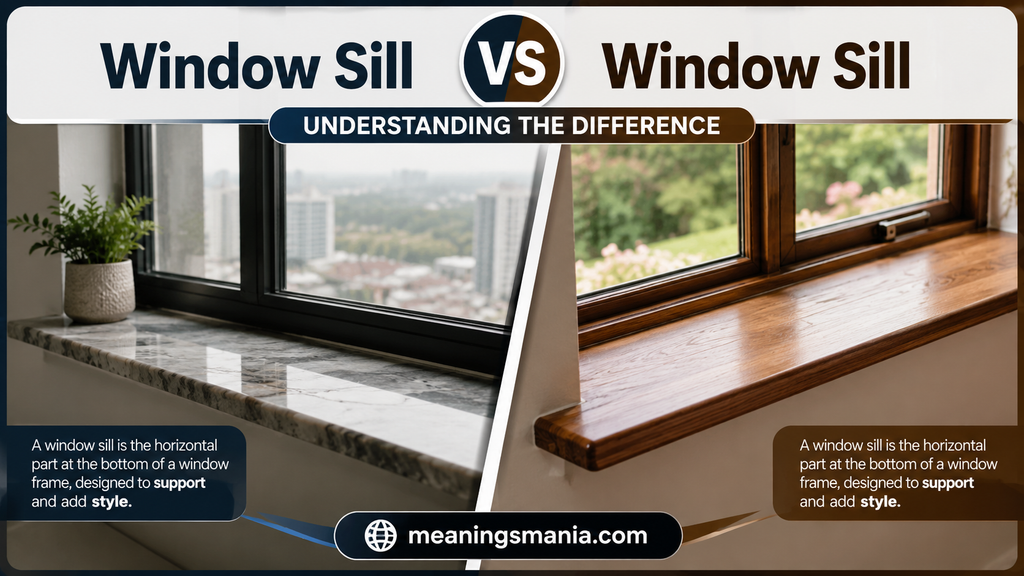
The window sill is the horizontal section at the bottom of a window. It can be found inside, outside, or as part of a broader window assembly, depending on the design.
An interior window sill often creates a small ledge beneath the glass. You might use it for plants, decorations, books, or simply leave it empty. An exterior sill has a more practical role because it can help move rainwater away from the window and surrounding wall.
The window sill meaning becomes easier to remember when you picture a small shelf at the bottom of a window. It’s a physical part of the window opening rather than a flexible barrier.
Window sills can be made from wood, vinyl, PVC, stone, composite materials, or other building products. The material affects durability, appearance, maintenance needs, and resistance to moisture.
How Does a Window Sill Differ From a Window Ledge?
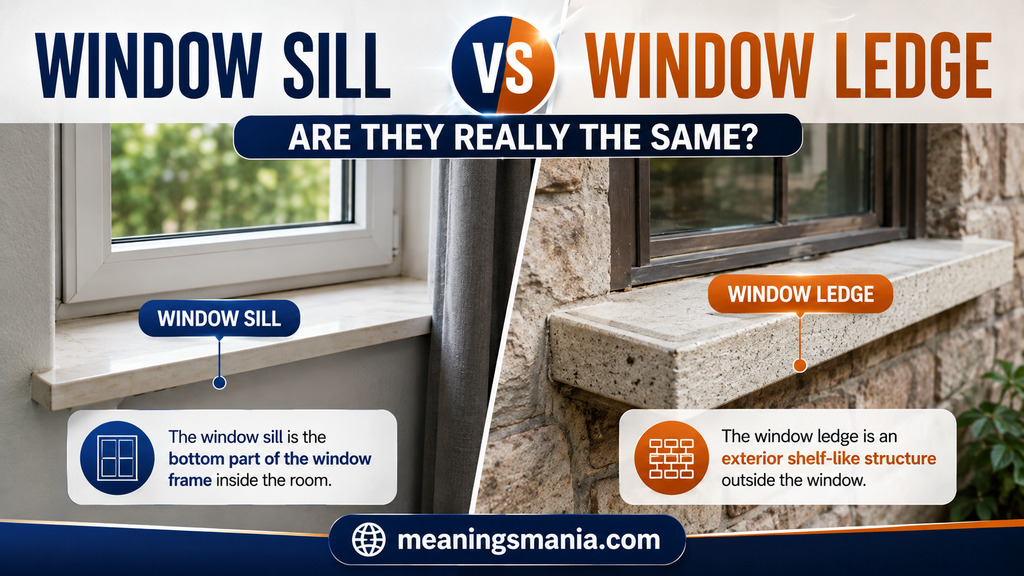
The terms window sill and window ledge are often used interchangeably in everyday conversation. Both can describe the horizontal surface at the bottom of a window.
However, “window sill” is generally the more precise term when discussing window construction. “Window ledge” is often more casual and may simply describe the visible surface people use as a shelf.
For example, someone might say, “I put my plant on the window ledge.” A contractor may instead refer to the same area as the window sill.
The exact terminology can vary, but the important point remains the same: neither term normally refers to the sealing material around the window.
Window Seal vs Window Sill: Key Differences
The biggest difference between window seal and sill comes down to function. A seal acts as a barrier, while a sill is a structural or architectural surface.
| Feature | Window Seal | Window Sill |
| Main purpose | Limits air and moisture movement | Provides a bottom ledge and helps manage water |
| Typical location | Around glass, sash, or frame areas | At the bottom of the window |
| Appearance | Often hidden or subtle | Usually visible |
| Common materials | Rubber, gasket materials, sealants | Wood, vinyl, PVC, stone, composite |
| Common problems | Drafts, moisture, condensation, seal failure | Rot, cracks, staining, water damage |
| Maintenance | Inspection and seal replacement | Cleaning, painting, repair, or replacement |
A useful memory trick is simple: the seal seals, while the sill sits at the bottom.
That distinction also helps when talking to a contractor. If you say the sill is causing a draft when the real issue is weatherstripping, you may end up discussing the wrong repair.
Why Are Window Seal and Window Sill Often Confused?
The words sound alike, and both belong to the same window system. That alone makes them easy to mix up, especially if you don’t regularly work with construction or home maintenance.
There’s another reason, too. Both parts can play a role in protecting a building from moisture. A seal helps stop water from getting through gaps, while an exterior sill helps move water away from the window area.
People also use informal language differently. Someone might call several parts of a window “the seal” or “the ledge” without knowing their technical names.
The confusion becomes especially common online. Search results, DIY discussions, and casual conversations may use related terms loosely. Learning the basic parts of a window makes these differences much easier to recognize.
When Should You Use the Term “Window Seal”?
Use window seal when you’re talking about a component that closes or protects a gap around the window.
For example, you’d use the term when discussing:
- Air leaks around a closed window
- Weatherproofing
- Drafts during cold weather
- Moisture entering through gaps
- A failed glazing seal
- Worn weatherstripping
- Window insulation problems
If someone says, “My window seal is damaged,” they’re usually describing a sealing component rather than the bottom ledge.
The term is also useful when discussing window seal replacement. Depending on the window, replacement may involve installing new weatherstripping, gaskets, or other sealing materials.
Examples of “Window Seal” in Everyday Use
Imagine you close your bedroom window and still feel cold air near the frame. You might say, “The window seal may be worn.”
Another example involves an insulated double-pane window. If moisture or fog develops between the panes, a failed seal could be responsible.
You might also hear a homeowner say:
- “The seal around my window is cracking.”
- “I need to replace the weather seal.”
- “The window has a draft because the seal isn’t tight.”
- “The glazing seal appears to have failed.”
In each case, the conversation centers on preventing air or moisture movement.
When Should You Use the Term “Window Sill”?
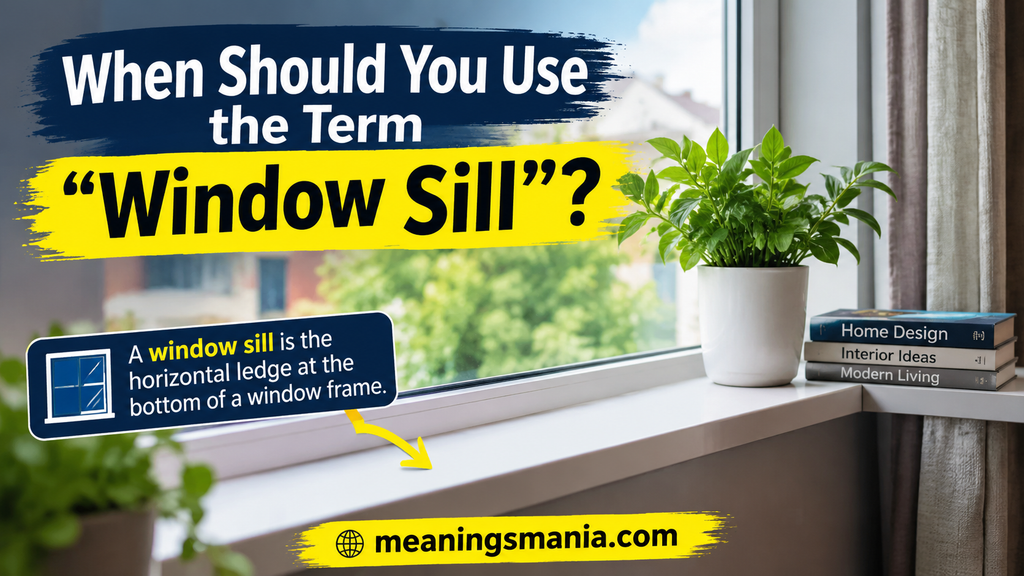
Use window sill when you mean the horizontal surface at the bottom of a window.
Think about the spot where you might place a small plant. That’s the easiest everyday example of a sill.
You’d also use the term when discussing:
- Exterior window drainage
- Interior window surfaces
- Cracks or stains on the bottom ledge
- Wooden sill rot
- Window sill replacement
- Water damage around the window opening
For instance, saying “the wooden window sill is rotting” makes sense. Saying “the window seal is rotting” would describe a very different problem.
Understanding the window sill definition can also help when reading home improvement instructions. If a guide tells you to inspect the sill, you know to look at the bottom section rather than the sealing material.
Signs Your Window Seal May Be Damaged
A damaged window seal can show itself in several ways. Some signs are obvious, while others develop slowly.
You may notice cold air around the edges of a closed window. In warmer weather, you might feel warm outdoor air entering instead. These drafts can make a room less comfortable and may increase heating or cooling demands.
Other warning signs include:
- Moisture around the window
- Fogging between glass panes
- Noticeable drafts
- Loose or cracked weatherstripping
- Water entering around the frame
- Increased outside noise
- Difficulty maintaining a comfortable indoor temperature
Not every problem automatically means the seal has failed. Installation issues, damaged frames, drainage problems, and other components can create similar symptoms.
How to Tell if a Window Seal Needs Replacement
Start by inspecting the visible sealing material. Look for cracks, gaps, brittleness, shrinking, or areas that have pulled away from the frame.
Next, pay attention to how the window feels and performs. A persistent draft around a closed window can point toward worn weatherstripping. Condensation trapped between insulated panes can indicate failure within the glass unit’s sealing system.
If the problem involves an insulated glass unit, replacing the entire sealed glass unit may be more practical than attempting a simple DIY repair.
For older or complicated windows, professional inspection can help identify the actual source. That matters because replacing the wrong component won’t solve the underlying issue.
Common Problems With Window Sills
Window sills face their own set of problems, especially when they’re exposed to rain and moisture.
Wooden sills can develop wood rot if water repeatedly reaches the material and remains there. Paint may peel, surfaces can swell, and cracks may appear. Over time, moisture damage can spread into nearby trim or wall materials.
Other common window sill problems include:
- Cracking
- Peeling paint
- Staining
- Mold growth
- Soft or rotting wood
- Poor drainage
- Water pooling near the window
Exterior sills deserve particular attention because they deal directly with outdoor weather. Keeping drainage paths clear and repairing damaged surfaces early can prevent bigger problems.
If a sill has extensive deterioration, Window Sill vs Window Sill replacement may be necessary rather than another cosmetic repair.
Window Seal vs Window Sill vs Window Frame
The window seal vs window frame distinction adds another useful piece to the puzzle.
The window frame forms the main structural border around the window. It helps hold the window assembly in place and connects it with the surrounding wall.
The window seal is a protective sealing component. It helps reduce gaps and limit unwanted air or moisture movement.
The Window Sill vs Window Sill is positioned at the bottom of the window. It can provide support and help manage water, especially on the exterior.
Think of the three this way:
- Frame: Holds the window system together.
- Seal: Closes gaps and helps protect against air and moisture.
- Sill: Forms the bottom ledge and helps with support and drainage.
These parts work together, but they aren’t interchangeable.
Window Sill vs Window Ledge: Are They Really the Same?
In casual speech, window sill vs window ledge usually isn’t a major distinction. People often use “ledge” to describe the same horizontal surface.
However, the word “sill” is more common when discussing construction, architecture, installation, and repairs. “Ledge” tends to sound more conversational.
For example, a homeowner might tell a friend, “My cat sleeps on the window ledge.” A professional might refer to the same area as the sill when discussing repairs.
Regional language can also influence which word people prefer. The safest choice in a technical context is usually window sill.
Real-Life Examples of Window Seals and Window Sills
Real-world examples make the difference much easier to remember.
Imagine you’re sitting beside a window during winter. You notice a steady stream of cold air near the closed frame. That situation points toward a possible seal or weatherstripping issue.
Now picture a flower pot sitting on the flat surface beneath the window. That surface is the sill.
Consider another situation. After heavy rain, you notice water collecting around the bottom exterior of the window. The sill and surrounding drainage system deserve inspection. If water is entering through a gap, however, sealing may also be part of the problem.
These examples show why identifying the exact component matters. A draft, a cracked sill, and foggy glass may all involve different repairs.
Common Mistakes People Make With Window Terms
One of the most common mistakes is treating window seal and window sill as synonyms. They aren’t.
Another mistake is assuming every water-related window problem comes from the seal. Poor sill drainage, damaged flashing, failed caulk, or problems around the window opening can also allow moisture to enter.
People sometimes confuse the sill with the frame, too. The frame surrounds the window, while the sill occupies the bottom portion.
A few common mix-ups include:
- Calling the bottom ledge a seal
- Calling weatherstripping a sill
- Assuming every leak means seal failure
- Confusing the sill with the entire frame
- Using “ledge” and “seal” as if they mean the same thing
Using accurate terms makes repair conversations much clearer. It also helps you search for the right maintenance instructions.
How to Fix or Replace a Damaged Window Seal
The right window seal repair depends on which seal has failed. A small section of worn weatherstripping may be relatively straightforward to replace, while a failed insulated glass seal can require a replacement glass unit.
For basic weatherstripping, the process may involve removing the old material, cleaning the surface, measuring correctly, and fitting a compatible replacement.
However, don’t assume every seal can be repaired with ordinary caulk. Caulk can seal certain exterior gaps, but it isn’t a universal replacement for a gasket or glazing seal.
If you’re unsure which component has failed, identify the location of the draft or moisture first. That small step can prevent an unnecessary repair.
How Much Does Window Seal Replacement Usually Cost?
The cost of window seal replacement varies widely because “seal replacement” can mean several different repairs.
Replacing simple weatherstripping may be less expensive than repairing an insulated glass unit. Labor, window size, accessibility, materials, and the type of window can all affect the final price.
For that reason, it’s better to identify the failed component before estimating the repair. A professional quote can provide a more realistic figure when the issue isn’t obvious.
How to Prevent Water Damage Around a Window Sill
Preventing window sill water damage starts with keeping moisture moving away from the window rather than allowing it to sit.
Inspect exterior sills regularly, especially after severe weather. Look for cracks, peeling finishes, soft wood, standing water, or damaged joints.
A few simple maintenance habits can help:
- Keep drainage paths clear.
- Repair cracks before they spread.
- Maintain protective paint or finishes.
- Replace badly deteriorated materials.
- Check surrounding caulk when appropriate.
- Watch for recurring moisture stains indoors.
If water keeps appearing despite surface repairs, the problem may extend beyond the sill. Proper flashing, a sill pan, surrounding sealant, and installation details may need inspection.
What Causes a Window Sill to Rot or Crack?
Wood rot usually develops when moisture repeatedly reaches the wood and doesn’t dry properly. Poor drainage, damaged paint, failed joints, and prolonged exposure can all contribute.
Cracking can result from age, weather changes, movement, impact, or material deterioration. Severe cracks shouldn’t be ignored because they can allow more water to reach vulnerable areas.
If you see soft wood or deep damage, cosmetic patching may only hide the problem temporarily. The damaged section may need proper repair or replacement.
Do Window Seals and Window Sills Affect Energy Efficiency?
They can, but they influence efficiency in different ways.
A good window seal directly helps reduce air leakage. If warm indoor air escapes through gaps in winter, or hot outdoor air enters during summer, your heating and cooling system may have to work harder.
The sill isn’t normally an air barrier in the same way. However, poor sill design, water intrusion, or damage around the window opening can affect the overall performance of the window assembly.
Good window maintenance therefore involves more than checking the glass. The frame, seals, sill, drainage, and surrounding materials all deserve attention.
Can a Damaged Window Seal Cause Drafts and Condensation?
Yes, a damaged seal can contribute to drafts, while failed seals in insulated glass can allow moisture to appear between panes.
However, condensation doesn’t always mean the Window Sill vs Window Sill has failed. Indoor humidity, temperature differences, ventilation, and other conditions can also create condensation.
If moisture is trapped permanently between double-pane glass, that is a stronger indication of a failed insulated glass seal.
FAQs About Window Seal vs Window Sill
What is the main difference between a window seal and a window sill?
A Window Sill vs Window Sill blocks air and moisture, while a window sill forms the bottom ledge and helps support drainage.
Is a window sill the same as a window ledge?
Usually, yes, but Window Sill vs Window Sill is the more common technical term for the horizontal bottom surface.
What does a window seal do?
A Window Sill vs Window Sill closes gaps around window components, helping reduce drafts, moisture entry, dust, and unwanted air movement.
How can you tell if a window seal is damaged?
Look for drafts, cracked weatherstripping, moisture, foggy insulated glass, or air leakage around a closed window.
Can a damaged window sill cause water leaks?
Yes. Cracks, rot, poor drainage, or deteriorated materials can allow water to reach surrounding walls and window components.
Does a window seal improve energy efficiency?
Yes. A properly functioning seal can reduce air leakage, helping your heating and cooling system maintain comfortable indoor temperatures.
Should you repair or replace a damaged window seal?
The best option depends on the seal type, damage, and Window Sill vs Window Sill design; simple weatherstripping differs from failed insulated glass.
Conclusion
The difference between a window seal and a window sill is actually pretty simple once you know what to look for.
A seal is designed to close gaps and help protect against drafts, moisture, and air leakage. A sill is the horizontal section at the bottom of the window. It can provide support and help direct water away from the building.
So, when you’re thinking about Window Seal vs Window Sil, remember the basic rule: the seal seals, while the sill sits at the bottom.
Knowing these terms isn’t just useful for vocabulary. It can help you describe a problem accurately, choose the right repair, and understand how your windows work. Whether you’re dealing with condensation, a draft, a cracked sill, or water damage, identifying the correct component is the first step toward fixing it.
