
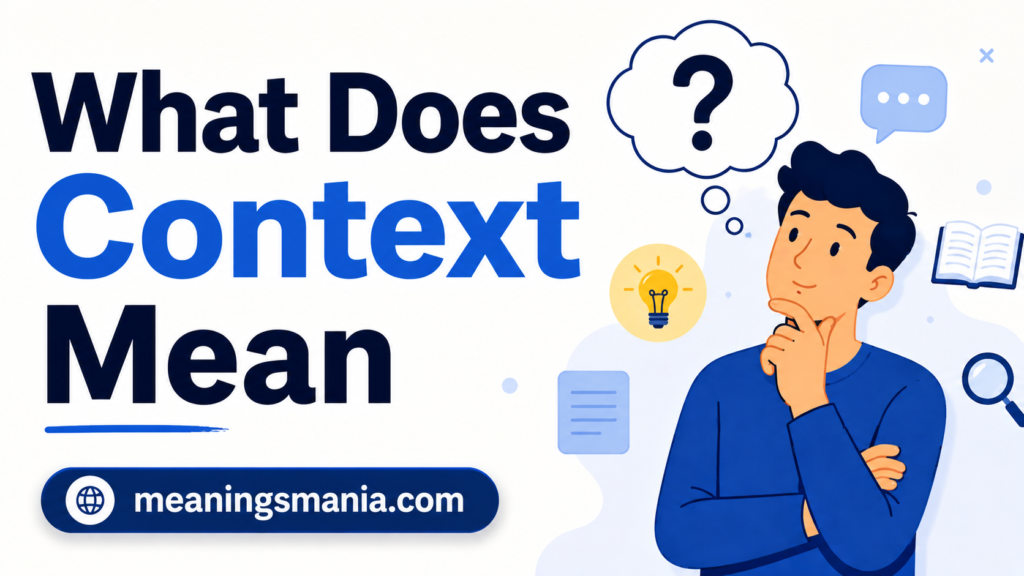
Have you ever wondered what does context mean? Many people use the word without fully understanding it. Knowing context helps you understand words, sentences, and situations better. So, what is the meaning of context? Simply put, it is the information around a word or event that gives it full sense.
When you ask What does context mean, you are trying to see the bigger picture. Understanding context shows why something happens or why words are used in a certain way. The meaning of context can change depending on language, culture, or situation. For example, in a conversation, reading the surrounding words gives clues.
This is why people search for context meaning online. Learning it makes communication clearer. So, what does context mean in your daily life? Let’s explore.
What Does Context Mean in Simple Terms and Everyday Life
In simple terms, context is the situation, background, or circumstances that help explain the meaning of something. Understanding what does context mean makes it easier to interpret words, actions, and events correctly.
In everyday life, context influences how we understand messages and behavior. For example, if someone says, “I’m busy,” the meaning may vary depending on whether they are at work, studying, or handling a personal matter. The surrounding situation provides the context needed to understand the statement accurately.
By paying attention to context, people can communicate more effectively and avoid unnecessary misunderstandings.
What Does Context Mean in Communication and Conversation
Communication relies heavily on context. Knowing what does context mean helps people understand the true intention behind words rather than focusing only on the words themselves.
For example:
- The phrase “That’s interesting” can express curiosity, surprise, or even skepticism depending on the speaker’s tone.
- A simple “Okay” may signal agreement, disappointment, or frustration based on the conversation.
- Cultural and social settings can also affect how messages are interpreted.
Context helps listeners and speakers share information more clearly, making conversations more meaningful and accurate.
What Does Context Mean in Writing and Text Interpretation
When reading any type of content, context helps determine the intended meaning of words and sentences. Understanding what does context mean is essential for accurate text interpretation.
For example:
- A quote may appear controversial when read alone but make perfect sense when viewed within the full article.
- A character’s actions in a novel become clearer when readers understand the events leading up to them.
- News headlines can sometimes be misleading without reading the surrounding content.
Writers use context to guide readers, while readers use context to interpret information correctly and avoid misunderstandings.
What Does Context Mean in Language and Grammar Usage
In language and grammar, context helps determine how words, phrases, and sentences should be understood. Knowing what does context mean allows people to choose the correct interpretation when a word has multiple meanings.
Consider these examples:
| Word | Possible Meanings | Context Example |
| Bat | An animal or sports equipment | “He swung the bat during the game.” |
| Light | Illumination or not heavy | “This bag is very light.” |
| Watch | A timepiece or observe something | “Please watch the presentation carefully.” |
Context also influences grammar choices, pronoun references, and sentence structure. Without context, language can become confusing, making effective communication much more difficult.
What Does Context Mean in Social Media and Online Chats
In social media and online chats, context is key to interpreting messages accurately. Knowing what does context mean helps avoid misunderstandings caused by tone, emojis, or abbreviations. For example:
- “LOL” could indicate genuine laughter or sarcasm depending on the conversation.
- Memes and GIFs may convey humor or criticism based on the context of the discussion.
- Comments on posts can be supportive or critical depending on surrounding replies.
Understanding context ensures clear communication and prevents online conflicts.
What Does Context Mean When Understanding Word Meaning
Words often have multiple meanings, and context determines which one applies. Knowing what does context mean helps you interpret language correctly. For instance:
- The word “pitch” could mean a sales proposal, a baseball throw, or a musical tone — context reveals the right meaning.
- In idioms like “break the ice,” the surrounding text or situation clarifies that it refers to easing tension, not literally breaking ice.
Recognizing context improves comprehension and reduces ambiguity in language.
What Does Context Mean in Academic and Educational Settings
In education, context helps students understand lessons more deeply. Knowing what does context mean allows teachers and learners to connect concepts with real-world examples. For example:
- A math problem becomes clearer when the scenario or application is explained.
- Historical events make more sense when tied to social, political, and cultural conditions.
- Science experiments are better understood when the purpose and background are provided.
Context enhances learning and critical thinking in academic environments.
What Does Context Mean in Business and Workplace Communication
In business, understanding context ensures effective collaboration and decision-making. Knowing what does context mean helps interpret instructions, emails, and meetings correctly. For instance:
- A manager saying “We need this soon” may mean hours or days depending on project urgency.
- Negotiation statements can be misinterpreted without understanding cultural or situational context.
- Marketing messages must consider audience background to avoid miscommunication.
Recognizing context improves workplace efficiency, relationships, and overall productivity.
What Does Context Mean in Literature and Story Analysis
In literature, context helps readers understand characters, themes, and events. Knowing what does context mean allows you to interpret a story beyond the literal words. For example, historical, cultural, or social settings influence a character’s actions and the plot’s development. By analyzing context, readers can uncover deeper meanings, symbolism, and author intent, making literary analysis richer and more accurate.
What Does Context Mean in Real-Life Situations and Examples
Context shapes how we interpret everyday situations. Understanding what does context mean helps in making better decisions and responding appropriately. Examples include:
- A coworker’s “I’m fine” might mean they are stressed or genuinely okay, depending on tone.
- A traffic stop could be routine or serious, depending on surrounding circumstances.
- In shopping, “limited stock” could indicate urgency or just marketing language.
Recognizing context ensures clearer understanding and effective action in real life.
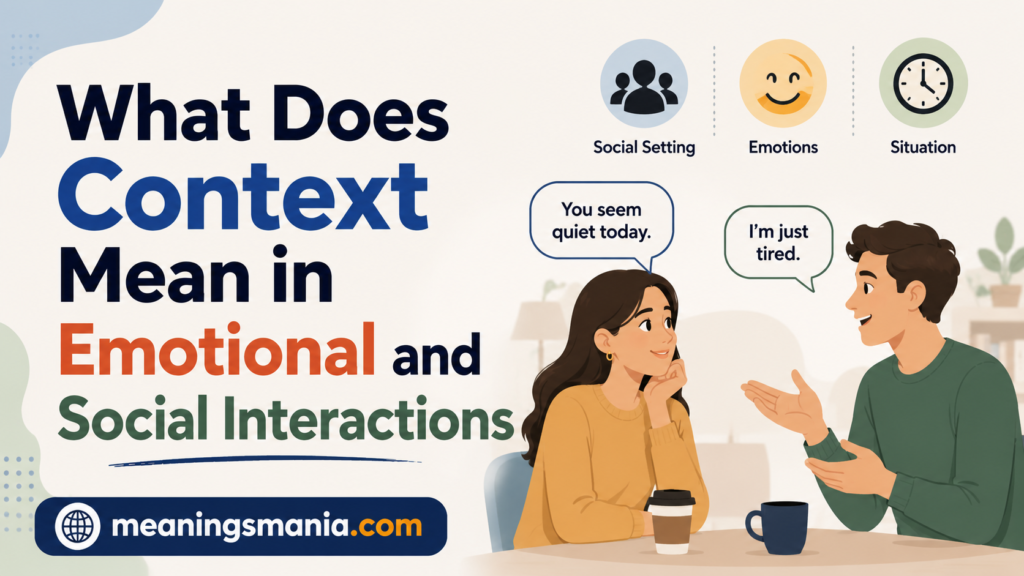
What Does Context Mean in Emotional and Social Interactions
Emotions and social cues are deeply influenced by context. Knowing what does context mean allows you to interpret feelings and behavior correctly. For instance:
- A laugh might indicate humor, nervousness, or sarcasm depending on the situation.
- Silence in a conversation can signal discomfort, thoughtfulness, or disagreement.
- Social norms and cultural background influence how messages are received.
Understanding context strengthens empathy, communication, and interpersonal relationships.
What Does Context Mean in History and Event Interpretation
Historical events can be misunderstood without context. Knowing what does context mean helps us analyze causes, consequences, and significance accurately. For example:
- The French Revolution cannot be fully understood without considering the economic hardship and political unrest of the time.
- World War II decisions gain clarity when viewed in the context of global alliances and preceding conflicts.
- Social movements are better interpreted by examining the historical struggles and cultural environment behind them.
Context allows historians and learners to avoid oversimplifications and see the bigger picture.
What Does Context Mean in Digital Content and SEO Writing
In digital content and SEO writing, context determines how search engines and readers interpret your text. Keywords alone are not enough; understanding what does context mean ensures your content is relevant and meaningful. For example, the phrase “best marketing strategies” could target social media, email campaigns, or SEO — the surrounding content clarifies the focus. Proper context improves readability, engagement, and search engine ranking.
What Does Context Mean and Why It Is Important in Understanding
Context is the background or situation that gives meaning to information. Knowing what is context mean is essential because it helps you:
- Interpret messages accurately.
- Avoid misunderstandings in communication.
- Learn and retain information more effectively.
Without context, even clear statements can be confusing. Recognizing context is crucial for understanding everything from simple conversations to complex texts.
What Does Context Mean with Easy Examples for Better Clarity
Examples make understanding context simple:
| Example | Context | Meaning Clarified |
| “He’s on fire.” | During a basketball game | He is playing exceptionally well |
| “She’s gone to the bank.” | Talking about a river trip | She is at the side of a river |
| “I can’t bear it.” | Discussing emotions | I can’t tolerate the situation |
These examples show how context changes meaning, making communication clearer and more precise.
Why Knowing What Does Context Mean Improves Communication Skills
Understanding what does context mean is essential for clear communication. Context shapes how messages are interpreted, preventing misunderstandings and confusion. By recognizing the surrounding circumstances of words, sentences, or events, you can convey your ideas more effectively and respond appropriately in conversations. Whether in personal chats, professional meetings, or online interactions, knowing context ensures your message is received as intended.
Common Examples That Explain What Does Context Mean Clearly
Seeing what does context mean in action makes it easier to grasp. For example:
- In a conversation, the sentence “That’s great” can express genuine approval or sarcasm depending on the tone and situation.
- In writing, “He left early” could mean leaving a party or quitting a job — the context clarifies which.
- In history, understanding the context of an event, like the Industrial Revolution, helps explain societal changes.
These examples show how context gives words and events the meaning they need to be understood correctly.
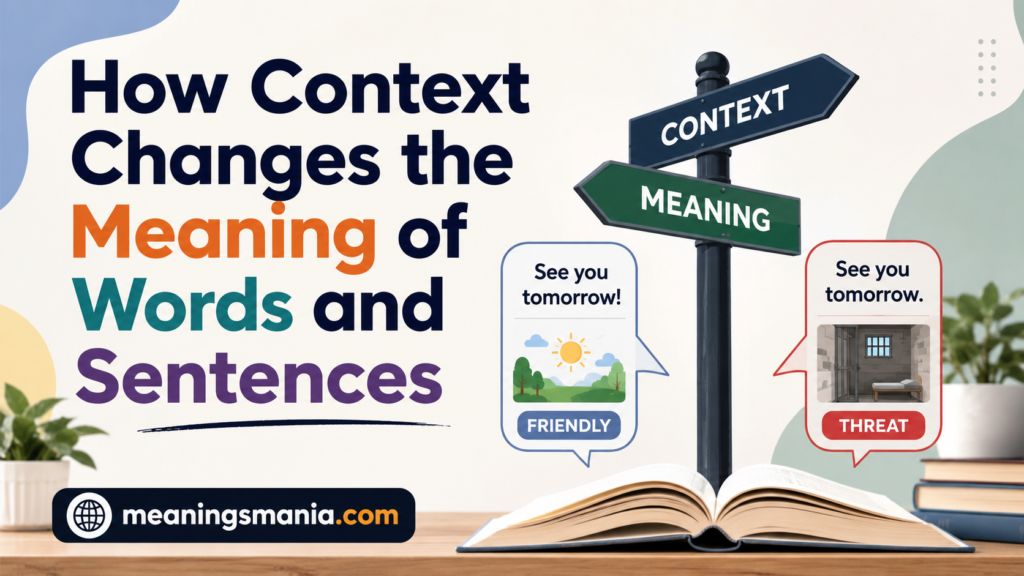
How Context Changes the Meaning of Words and Sentences
Words and sentences can have multiple interpretations, and context decides which meaning applies. For instance, the word “bank” can refer to a financial institution or the side of a river. The surrounding words or situation reveal the correct meaning. Without context, communication can become confusing or misleading. By paying attention to context, you ensure clarity in both spoken and written language.
Mistakes People Make When They Ignore Context in Communication
Ignoring context often leads to misunderstandings and misinterpretations. Common mistakes include:
- Misreading sarcasm or humor in conversations.
- Taking quotes or statements literally without understanding the surrounding situation.
- Misinterpreting written instructions or messages.
By neglecting what does context mean, people risk confusing others, creating conflict, or making poor decisions. Being aware of context prevents these errors and promotes clearer communication.
What Does Context Mean Compared to Definition and Content
It’s important to differentiate context from definition and content. While a definition explains the meaning of a word and content refers to the information presented, context provides the surrounding circumstances that influence interpretation. For example, the word “strike” can mean a labor protest, a baseball hit, or a military attack — the context reveals which meaning applies. Understanding what does context mean ensures you interpret words and situations correctly.
How to Identify Context Quickly When Reading or Listening
Identifying context helps you understand meaning efficiently. Here are some quick strategies:
- Look at surrounding words or sentences for clues.
- Consider the speaker’s tone and body language in conversations.
- Evaluate the broader situation or background relevant to the message.
- Ask clarifying questions if something seems unclear.
Recognizing what context means allows you to respond accurately and avoid misunderstandings in real time.
FAQ’s
What does context mean in simple words
It means the situation or background that helps you understand words, actions, and events more clearly in daily life.
Why is context important in communication
It helps you understand intent and meaning correctly, so messages are not misunderstood in conversations or writing.
How does context affect word meaning
Words can change meaning depending on surrounding information, so context gives the correct interpretation in any sentence.
What is context in writing
It is the surrounding text that helps readers understand the true meaning of sentences, ideas, and expressions clearly.
Can context change meaning of a sentence
Yes, the same sentence can mean different things depending on the situation, tone, and background information provided.
What is social context meaning
It refers to cultural, emotional, and situational background that shapes how people behave and respond in interactions.
How does context help in learning
It improves understanding by giving background clues, making it easier to learn new words, ideas, and concepts quickly.
Conclusion
Understanding what does context mean is important in every part of life. Knowing the context’s meaning helps you interpret words, sentences, and situations correctly. When you ask what the meaning of context is, you are looking for the background that gives sense to actions and words.
It is also helpful to know the meaning of context in conversations, writing, and reading. Asking What does context mean around a statement can prevent misunderstandings. Even small clues in language or behavior can change the meaning completely. For example, tone, setting, and surrounding words give full clarity.
Learning for context means improves communication and understanding. By practicing this, you can interpret situations more accurately. In short, what does context mean guides your reading, writing, and everyday interactions. It makes life clearer and more understandable.
