


Have you ever typed boujee vs bougie and wondered why both words seem to mean almost the same thing? You’re definitely not alone. These terms appear everywhere, from social media captions to everyday conversations. However, their spelling, tone, and background can make things surprisingly confusing.
Maybe you’re wondering whether to say bougie or boujee, or you’re searching for the real boojie meaning. The answer depends on how the word is being used. One version has deeper historical roots, while the other became especially popular through modern slang and pop culture.
This guide clears up the confusion in simple language. You’ll learn about the correct bougie spelling, when each version fits, and how do you spell bougie without second-guessing yourself. By the end, you’ll know exactly which word to use and why.
Why Do People Confuse Bougie and Boujee?
Honestly, the confusion makes sense. The words look similar, sound similar, and often describe the same things. You might hear someone say, “That place is so boujee,” and another person write, “That place is so bougie.”
Many people also learn the word through conversations, songs, or videos before seeing it written. That makes the bougie spelling harder to remember. The pronunciation alone doesn’t always tell you which version the writer intended.
Their shared history adds another layer of confusion. The slang terms are connected to older ideas about class and social status, but modern usage has given each spelling its own personality.
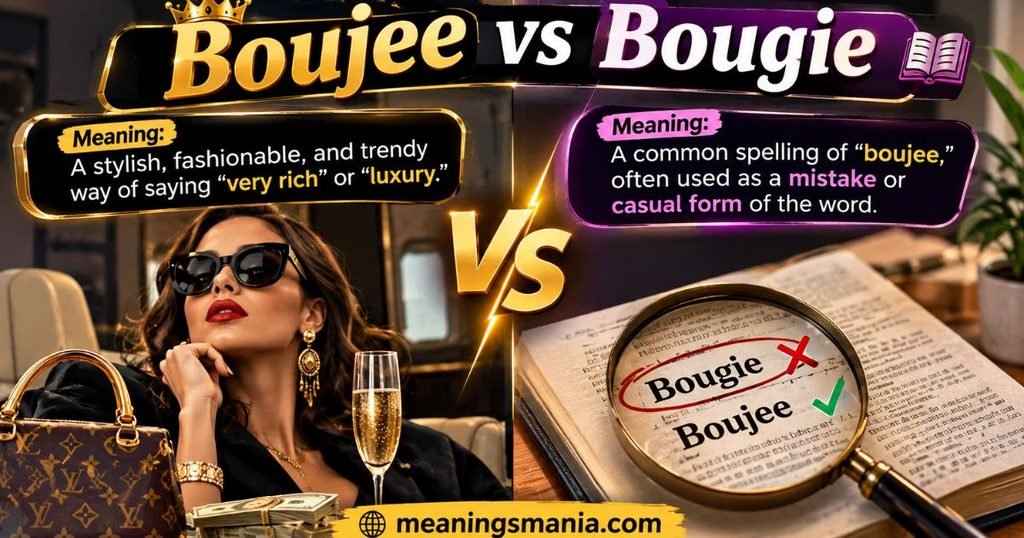
Key Differences Between Bougie and Boujee at a Glance
Here’s an easy way to understand the difference between bougie and boujee:
| Feature | Bougie | Boujee |
| Overall feel | Established and sometimes critical | Trendy and playful |
| Common idea | Fancy or status-conscious | Stylish or luxurious |
| Typical tone | Can be teasing or judgmental | Often fun or admiring |
| Common setting | Casual writing and conversation | Texts, captions, and pop culture |
| Formal use | Still informal | Very informal |
These aren’t strict grammar rules. Context can change everything. A friend might call your fancy coffee order “bougie” as a joke, while a caption might call the same experience “boujee” to celebrate it.
Bougie vs Boujee Meaning and Usage
At their core, both words point toward a lifestyle or thing that feels a little extra. Think fancy restaurants, designer clothes, luxury hotels, or even putting truffle oil on fries.
However, bougie meaning in slang can lean toward “trying too hard to look sophisticated.” boujee vs bougie meaning in slang often focuses more on enjoying a glamorous or stylish vibe.
For example:
- “That new restaurant feels kind of bougie.”
- “We upgraded our hotel room and felt totally boujee.”
The first sentence may contain a little side-eye. The second one sounds more like celebration.
What Does Boujee Mean in Modern Slang?
In modern slang, boujee usually means fancy, stylish, glamorous, or luxury-loving. It can describe a person, outfit, place, meal, or experience.
You don’t need to be wealthy to use the word. Someone might call a homemade dinner boujee simply because it looks beautifully presented. That’s part of the fun. The word often describes the feeling of luxury rather than actual wealth.
For example: “We drank sparkling juice from fancy glasses and suddenly dinner felt boujee.”
What Does Bougie Mean in Everyday Conversation?
Bougie can also mean fancy, but it sometimes carries more criticism. It may suggest that someone is focused on appearances, expensive tastes, or social status.
That said, it isn’t automatically rude. Friends often use it affectionately.
For example: “You won’t eat regular popcorn now? Wow, you’ve gotten bougie!” The meaning depends heavily on your relationship and tone of voice.
Tone, Context, and Social Meaning
This is where boujee vs bougie becomes more interesting. The dictionary-style meaning may overlap, but the emotional feeling can differ.
boujee vs bougie can sound skeptical or teasing. Boujee often sounds celebratory, fashionable, or playful. Still, either word can become positive or negative depending on the situation.
Imagine your friend buys an expensive candle:
- “That’s pretty bougie.” → possibly teasing
- “Okay, that’s so boujee!” → possibly excited and playful
The words don’t live in separate boxes. Your audience, delivery, and context help shape the meaning.
Which One Should You Use: Bougie or Boujee?
If you’re unsure, bougie is usually the safer choice in general informal writing. It’s the spelling many readers recognize outside highly casual slang.
Choose boujee when you’re writing a caption, text, meme, or playful post. It works especially well when you want a modern pop-culture feel.
A quick guide:
- Use bougie for casual descriptions or gentle criticism.
- Use boujee for trendy, fun, luxury-focused language.
- Avoid both in formal business or academic writing unless you’re discussing slang itself.
A Simple Rule for Choosing the Right Word
Ask yourself one question: Am I describing something, or am I creating a vibe?
If you’re simply describing something as fancy or a little pretentious, bougie usually fits well. If you’re writing something playful, stylish, or social-media-friendly, boujee may sound more natural.
And don’t stress too much. In everyday conversation, most people understand what you mean either way.
When Using Bougie or Boujee Can Sound Wrong
Because both words are informal, they won’t fit every situation. For example, a serious company report probably shouldn’t describe a product as “boujee.” A clearer choice might be premium, luxurious, or upscale.
Tone matters, too. Calling someone’s lifestyle bougie can sound judgmental if they don’t know you’re joking.
Also, don’t confuse these words with boujee vs bougie. Boogie relates to dancing or certain styles of music. It doesn’t mean fancy or luxurious.
Common Bougie vs Boujee Mistakes and How to Avoid Them
Here are a few mistakes people often make:
- Thinking one spelling is always wrong: Both appear in informal English, although they carry different stylistic associations.
- Using them in formal writing: These are slang terms, so clearer alternatives usually work better professionally.
- Assuming bougie always means rich: Something can feel bougie without costing much.
- Assuming boujee is always a compliment: It can still be sarcastic or critical.
- Writing “boogie” instead: That’s a completely different word.
The easiest fix is to focus on context rather than obsessing over one universal rule.
Everyday Examples of Bougie and Boujee
Real-life examples make the difference easier to feel:
- “This grocery store has a cheese counter bigger than my kitchen. It’s so bougie.”
- “We added fairy lights to the backyard dinner. Suddenly, it looked boujee.”
- “He’s gotten pretty bougie about his coffee.”
- “A rooftop brunch in matching outfits? That’s definitely boujee.”
- “That apartment is nice, but the residents’ lounge feels a little bougie.”
Notice that the meaning stays close, while the attitude shifts.

Boujee Examples in a Sentence
Here are a few natural ways boujee appears in casual conversation:
- “Let’s get dressed up and do something boujee tonight.”
- “Her birthday dinner was small but incredibly boujee.”
- “These hotel robes are making me feel boujee.”
- “He turned a regular picnic into a boujee event.”
- “That dessert looks way too boujee to eat.”
Bougie Examples in a Sentence
Here are some common ways to use bougie:
- “This little café is cute, but it’s definitely bougie.”
- “My brother has bougie taste in bottled water.”
- “They opened a bougie bakery downtown.”
- “Don’t get bougie on me just because you bought a new car.”
- “It’s a simple sandwich with surprisingly bougie ingredients.”
Dictionary Meaning and Word Details
In modern informal English, bougie and boujee are used mainly as adjectives. They describe people, places, things, or experiences.
The exact meaning changes with context. Sometimes the word means luxurious. Other times, it means pretentious. That’s why a direct synonym doesn’t always capture the full feeling.
Is Bougie a Noun, Adjective, or Verb?
In the slang sense, bougie is most commonly used as an adjective: “a bougie restaurant” or “a bougie lifestyle.”
People may casually use the word to label a person in conversation, but that doesn’t make it a standard verb. Boujee also works primarily as an informal adjective.
Synonyms and Related Words
The best alternative depends on the tone you want.
For a positive or neutral meaning, try:
- fancy
- stylish
- luxurious
- upscale
- glamorous
- high-end
For a more critical meaning, consider:
- pretentious
- snobby
- showy
- status-conscious
- materialistic
No synonym is perfect, though. Bougie and boujee carry a cultural tone that plain alternatives may not fully capture.
Common Example Sentences
You might hear:
“Why does your water bottle have its own carrying case? That’s bougie.”
Or:
“We ordered room service and watched movies all night. It was a boujee little weekend.”
Both examples describe something beyond the ordinary, but the mood is different.
The History Behind the Word
The slang family behind bougie is historically connected to bourgeois, a word associated with social class and the middle class. Over time, related slang forms developed and took on meanings involving status, taste, and lifestyle.
Modern usage has moved far beyond the original social-class meaning. Today, people can use the word for food, fashion, travel, home décor, and everyday habits.
Popular Phrases That Use Bougie or Boujee
Some phrases are especially common in casual speech and online posts:
- bougie lifestyle
- bougie coffee
- bougie neighborhood
- boujee vibes
- boujee brunch
- boujee outfit
- living boujee
The phrase you choose usually depends on whether you want a more established slang feel or a more modern, playful one.
Where Did Bougie and Boujee Come From?
The word origin helps explain why these terms involve both luxury and social commentary. Their slang history is connected to bourgeois, a term with roots in discussions of class and social position.
Over time, the word was shortened and reshaped in informal speech. Modern American usage, including African American English, played an important role in developing and spreading the slang meanings people recognize today.
The result is a word family that can talk about both social status and the fun of treating yourself.
From Bourgeois to Bougie
Bourgeois is an older term associated with the middle class and, depending on context, middle-class values or attitudes. The slang word bougie developed as a more casual form connected to those ideas.
That’s why bougie can sometimes imply more than simply “expensive.” It may suggest concern with looking refined, successful, or socially elevated.
How African American English Shaped the Word
Modern slang usage is closely associated with African American English and its influence on broader American popular culture. Like many slang terms, the word’s meaning has shifted as it moved between communities and generations.
Today, it has become part of mainstream slang language, but its cultural background still matters. Understanding that history helps you avoid treating the word as just a random trendy expression.
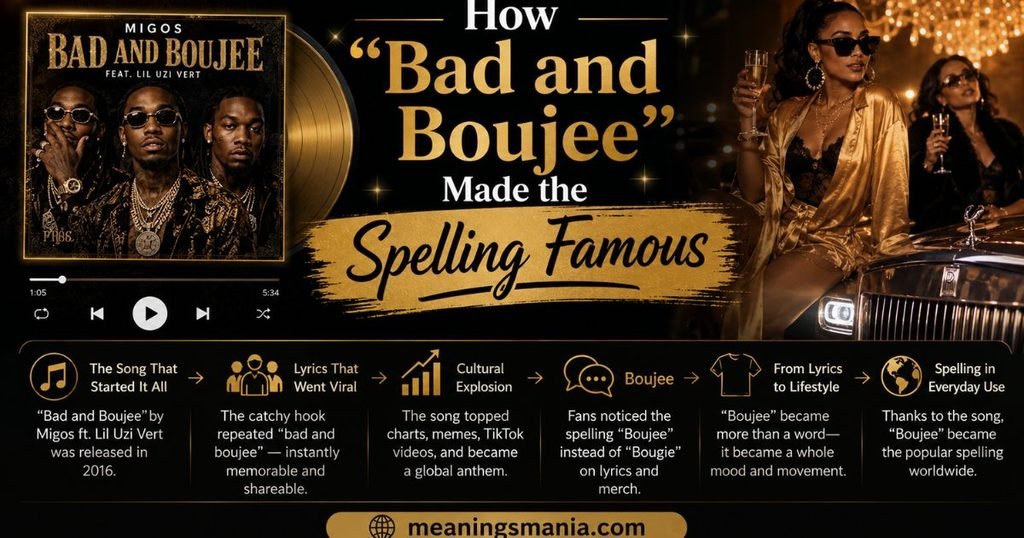
How “Bad and Boujee” Made the Spelling Famous
The spelling boujee became especially visible in mainstream pop culture through Migos and the hit song “Bad and Boujee.” The song helped make the spelling instantly recognizable to a huge audience.
It didn’t create the entire idea behind the slang word. However, its popularity gave boujee vs bougie a strong connection with hip-hop, success, style, and modern internet culture.
That’s one reason the word now appears so often in captions and memes. For many people, the -jee spelling immediately feels more current.
How to Pronounce Bougie and Boujee
Boujee is generally pronounced like “BOO-jee.”
Bougie can be pronounced differently depending on the speaker, including sounds close to “BOO-zhee” or “BOO-jee.” This variation is one reason the bougie vs boujee pronunciation question comes up so often.
If you’re speaking casually, the context usually makes your meaning clear. The bigger choice usually happens when you’re writing the word.
Is Boujee a Correct Spelling?
Yes, boujee is a recognized informal spelling used in modern slang. It isn’t simply a typo for bougie.
However, it is much more casual. If you’re writing a general article, explanation, or review and want the more established form, boujee vs bougie is often the better option.
So, the correct spelling of boujee depends partly on what you’re trying to communicate. Style matters here as much as spelling.
Is Being Called Bougie or Boujee an Insult or Compliment?
It can be either. That’s the honest answer.
If someone says, “Your new place is so boujee,” they may be admiring it. If they say, “You’ve gotten really bougie lately,” the comment may carry criticism.
Pay attention to the speaker’s tone and your relationship with them. Friends often use both words as playful teasing. In a tense conversation, the same word can feel much sharper.
Easy Rules and Memory Tricks for Bougie vs Boujee
You don’t need a complicated rulebook. Try these simple reminders:
- Bougie = the more established spelling.
- Boujee = the more playful, trendy spelling.
- Think about tone before choosing.
- Use clearer words in formal writing.
- Never replace either one with boogie.
The easiest memory trick? Boujee looks like the more stylized spelling, so it often fits a stylized or playful context.

Boujee Synonyms and Similar Slang Words
Depending on the sentence, related words include fancy, glamorous, swanky, lavish, and luxurious.
However, if you’re criticizing someone, words like pretentious, snobby, or showy may be closer to what you mean.
Choose carefully. Calling a dinner “luxurious” sounds very different from calling it “bougie,” even if both suggest expensive taste.
Related Words People Often Confuse With Bougie
The boujee vs bougie meaning question often leads to other confusing words. Some are historically related, while others are completely separate.
Boujee vs Bourgeois: What’s the Difference?
Bourgeois is a formal term connected with social class and economic history. Boujee is casual modern slang.
They’re historically related, but you wouldn’t normally swap them in a sentence. Saying a brunch is “bourgeois” doesn’t create the same meaning or vibe as calling it boujee.
In simple terms: bourgeois belongs in discussions about class and society, while boujee belongs in everyday informal language.
Bougie as a Medical Word and Other Meanings
The slang meaning isn’t the only meaning of bougie. In medicine, a bougie can refer to a specialized instrument used in certain procedures. That meaning is completely unrelated to fancy lifestyles or expensive taste.
The French word bougie can also mean a candle. So, if you see a definition that seems unrelated to slang, you’re probably looking at a different meaning of the same spelling.
What Does Boujee Mean on Social Media and in Text Messages?
On social media, boujee meaning in text messages often centers on treating yourself, looking stylish, or enjoying something that feels luxurious.
Someone might text:
Friend: “We booked the suite with the balcony.”
You: “Okayyy, that’s boujee 😂”
Here, the word is probably playful and positive. It doesn’t mean the person is actually wealthy.
Online, boujee can also describe an aesthetic. A beautifully arranged breakfast, fancy hotel bathroom, or polished outfit might all be called boujee.
How Boujee Is Used on TikTok, Instagram, and Snapchat
On visual platforms, the word often works as a quick description of a lifestyle or mood. You might see captions like:
- “A little boujee moment ✨”
- “Weekend plans: stay boujee.”
- “Not expensive, just feeling boujee today.”
The term works well because social media language often focuses on the vibe rather than a precise dictionary definition.
Can You Call Someone Boujee Without Offending Them?
However, don’t assume everyone sees the word as harmless. Because it can suggest snobbery or showing off, it may sound insulting when directed at someone you don’t know well.
When in doubt, use it to describe a moment or thing rather than making it a label for someone’s personality.
When Boujee Sounds Playful, Funny, or Judgmental
Compare these examples:
Playful: “You brought matching glasses for a picnic? That’s so boujee!”
Judgmental: “You think you’re too good for us now. You’re so boujee.”
The spelling doesn’t completely control the tone. The situation does. That’s why context is more important than memorizing a rigid definition.
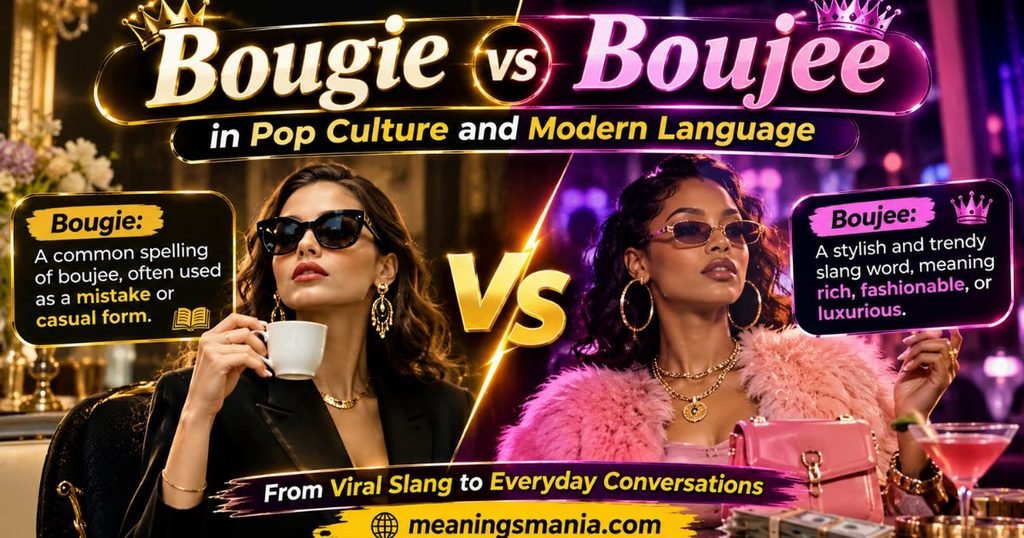
Bougie vs Boujee in Pop Culture and Modern Language
Pop culture helped turn these words into recognizable expressions far beyond their earlier communities. Music, memes, reality shows, and social platforms all helped spread the modern slang.
Today, people use the words for everything from luxury vacations to fancy snacks. Sometimes they’re serious. Often, they’re joking.
That flexibility is exactly why the terms have lasted.
Why the Meaning of Boujee Has Changed Over Time
Like most popular slang, boujee has evolved as more people started using it. Earlier associations with class and social behavior remain in the background, but modern usage often highlights style, confidence, and enjoying life’s nicer moments.
A person can now call a $10 coffee “boujee” simply because it feels indulgent. The price isn’t always the point. The experience is.
Language does that all the time. Words travel, change, and pick up new shades of meaning as different communities use them.
Frequently Asked Questions
Is boujee the same as bougie?
They overlap in meaning, but bougie is more established while boujee vs bougie usually feels trendier, more playful, and strongly connected to slang.
Which spelling should I use: bougie or boujee?
Use boujee vs bougie for general informal writing. Choose boujee for social media, captions, jokes, or a deliberately modern slang tone.
What is the boojie meaning in slang?
boujee vs bougie usually refers to bougie or boujee and describes someone or something fancy, stylish, luxurious, or concerned with appearances.
Is boujee a compliment or an insult?
boujee vs bougie can be either. It often sounds complimentary or playful, but context and tone can make it sound critical or judgmental.
How do you spell bougie correctly?
Bougie is the more established spelling. Boujee is also used intentionally as a modern slang variation with a trendier feel.
Does boujee mean rich?
Not necessarily. boujee vs bougie often describes a luxurious feeling or stylish vibe, even when something is inexpensive or only slightly indulgent.
What is the difference between bougie and bourgeois?
boujee vs bougie is informal slang about fancy tastes or status, while bourgeois is a formal term related to social class and history.
Conclusion
When it comes to boujee vs bougie, there isn’t one choice that works everywhere. Both words can describe something fancy, stylish, or connected with luxury.
The simplest distinction is this: boujee vs bougie is generally the more established form and can carry a critical edge, while boujee feels more playful, trendy, and rooted in modern pop culture. Use the one that matches your audience and tone.
And if you’re still wondering how do you spell bougie, remember this: choose bougie for the safer general spelling and boujee when you intentionally want that casual slang vibe.
